There was a time when the end of the workday was marked by a sound.
In 16th-century rural Germany, church bells would ring at dusk, and when they did, work tools were set aside. Not because the work was done—on a farm, there is always something else to do—but because the community had agreed, centuries before any labor laws existed, that the evening belonged to people, to family, and to rest.
Today, in our hyperconnected economy, that balance has been disrupted. And all generations—especially the youngest—are paying the price.
Feierabend: Europe's oldest right to disconnect
The Germans called this moment Feierabend: a compound word formed from Feier (celebration) and Abend (evening). In the 12th century, it referred to the eve of a holiday. By the 16th century, under the influence of the craftsmen’s guilds, it had taken on a more intimate meaning: the moment when the resting self recharges the working self.
Today, Feierabend is still very much alive in German culture. It’s the colleague who, as they leave the office, says “Schönen Feierabend!”, wishing you not only a good evening, but a smooth transition into it. It’s the unwritten rule against sending emails outside of working hours unless there’s a genuine emergency. In a way, it’s Europe’s oldest social contract for disconnecting, upheld not by law but by culture.
However, something is changing. Young Germans are reporting rising rates of anxiety, exhaustion, and psychological distress. Germans work an average of 33.9 hours per week—below the European average—and the country remains one of the most productive in the world on a per-hour basis. By all measures, Feierabend should be a success story. Why, then, is burnout on the rise?
The answer is simple and unsettling: Feierabend was designed for a world where work stayed in one place. The bells could ring because the workplace didn’t follow you home. Today, constant digital connectivity has erased that boundary.
France and the right to disconnect: a good law, but difficult to implement
France approached the same problem from a different angle: institutional structure rather than cultural tradition.
On January 1, 2017, the droit à la déconnexion —the right to disconnect—was incorporated into the French Labor Code. Stemming from a 2015 report on the impact of digital technology on working life, the law requires all companies with more than fifty employees to negotiate with their workers the conditions under which they may disconnect from work-related communications outside of working hours. It was the first legislation of its kind in the world.
The logic was clear: organizational systems designed without cognitive recovery protocols inevitably lead to a decline in performance. If the technology that connects workers to their offices lacks an “off” switch, it becomes impossible to restore focus—and with it, the executive function necessary for strategic thinking, complex problem-solving, and creative innovation.
But the "right to disconnect," while ambitious in theory, has faced challenges in practice. The law required negotiation with companies, not strict compliance. Whether the principle is actually upheld depends largely on the internal culture of each organization.
For young workers, the gap between the law and their actual experience can be enormous. Exercising the right to disconnect requires a level of job security that younger employees do not always feel they have.
The Belgian experiment: redistributing hours is not the same as taking time off
Belgium tried something different. In October 2022, the Belgian government approved the Labour Deal, a package of reforms that included the right for workers to condense their workweek into four days instead of five. The same thirty-eight hours, the same pay, but organized differently: four nine-and-a-half-hour workdays, followed by a three-day weekend.
Three years later, the results are mixed. According to government figures, less than one percent of eligible workers have adopted the compressed workweek. A study by Ghent University concluded that the reform had no noticeable effect on workplace burnout. In hindsight, the reason seems understandable: working nine and a half hours a day for four days isn’t necessarily less work. It’s the same workload, just concentrated differently.
The Belgian experiment reveals something important: the four-day workweek as it is commonly imagined—less work, same pay, higher productivity—is not what Belgium implemented. What Belgium implemented was, primarily, a redistribution of working hours. The fundamental question of how organizations create genuine opportunities for cognitive recovery within high-performance environments remains unanswered.
Three countries, one and the same paradox
Germany, France, and Belgium are among the best places in the world to work: generous vacation time, strong labor unions, universal healthcare, and legal protections that much of the world can only dream of.
And yet, burnout—especially among younger generations—continues to rise across all three. The European Foundation for the Improvement of Living and Working Conditions reports that young Europeans are increasingly reporting emotional exhaustion, disengagement, and difficulty maintaining sustainable work rhythms. The phenomenon cuts across borders, industries, and educational levels.
What these three countries have in common is not necessarily a failure of their policies, but rather the recognition that legislation and cultural tradition alone may not be enough to address the realities of a permanently connected economy.
The economic cost of burnout in Europe amounts to hundreds of billions of euros annually in lost productivity, absenteeism, and healthcare costs. Recovery is no longer viewed as the opposite of productivity, but rather as one of the conditions that enables sustained high-level performance over time.
A rest is not the silence between notes: it is part of the music
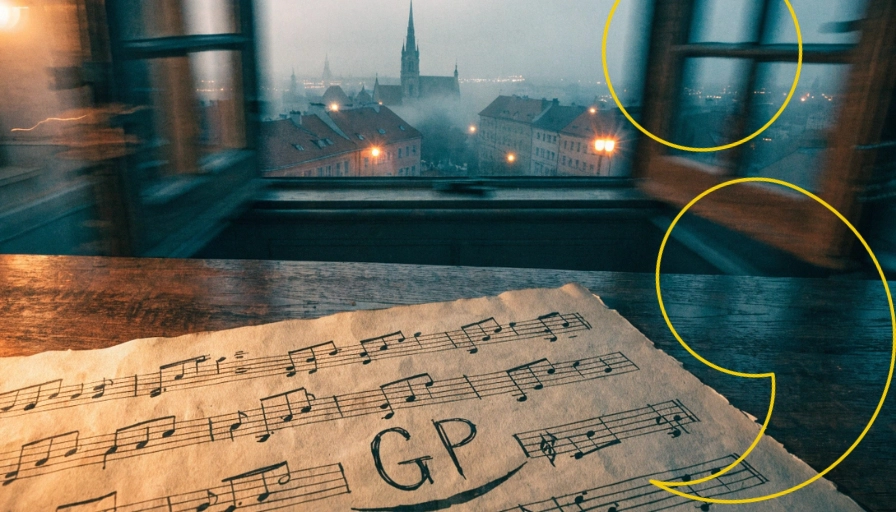
In music, there is a concept called a Generalpause: a moment of complete silence written into the score, where all the instruments stop at the same time. It is not an absence of music. The pause is part of the music. The silence belongs to the piece just as much as any note.
Perhaps this is the most honest picture that the experience of Northern Europe offers us. Not a failure, but an unfinished work. The laws exist. The traditions endure. The cultural vocabulary of downtime—Feierabend, droit à la déconnexion, compressed workweek—is richer here than almost anywhere else in the world. What remains to be written is the passage that makes silence sustainable within a permanently connected economy.
The organizations that will lead in the coming decades will likely be those that understand that human energy, like any high-value resource, must be replenished to maintain performance over time.
The author of this article recalls working in Frankfurt and hearing some colleagues say “Schönen Feierabend” as they closed their laptops at six o’clock. There were very few of them. And what was most telling: even they, mere seconds after stepping out into the evening chill, already had their attention back on their work phones.
Without taking a conscious break, we aren't protecting our productivity. We're slowly losing it.
This article kicks off the series *The World of the Pause — The Efficiency and the Pause Paradigm*, in which we explore the policies, practices, and evidence regarding rest as a strategic factor in well-being and sustainable productivity.