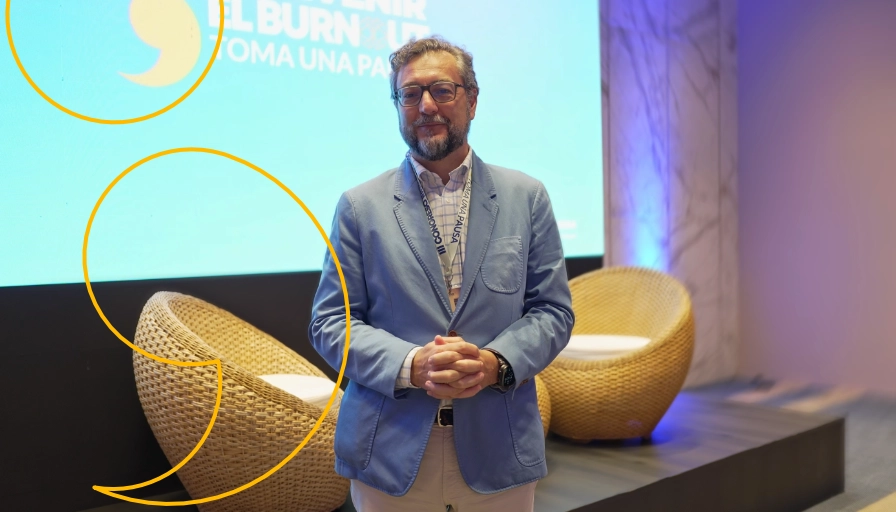
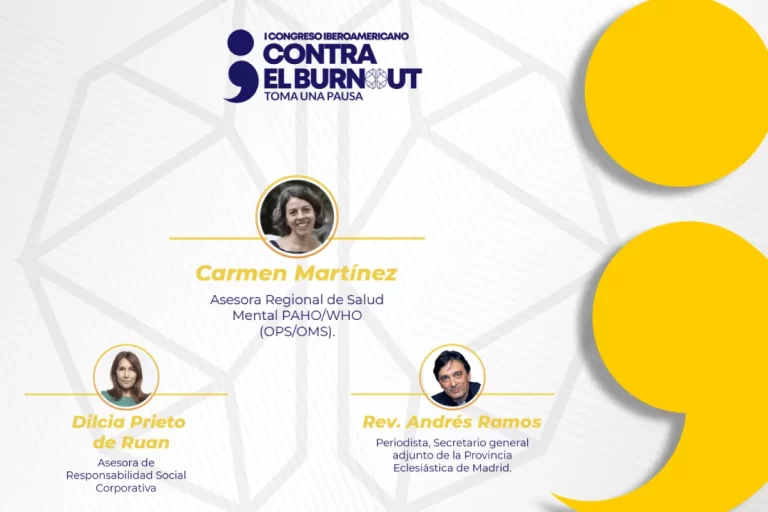
At our First Ibero-American Congress Against Burnout, we were honored to have Carmen Martínez, mental health advisor at the WHO, participate as a speaker.
In this article, we share exciting news about the First Ibero-American Congress Against Burnout, a crucial event in the fight for workplace well-being and mental health.
I would like to provide you with some informative tidbits so that you can delve into this important topic and learn about the valuable perspectives that were presented during the conference.
On the day of the conference, we were honored to have the participation of leading experts in the field of mental health and well-being. One of the highlights was the forum entitled "Vision in the Face of Burnout,"which generated an enriching dialogue on the challenges and solutions needed to address this syndrome.
Among the participants in this forum were Reverend Andrés Ramos and Dilcia Ruan, renowned specialists in the field of mental health and work. We also had the honor of welcoming Carmen Martinez, regional mental health advisor for PAHO and WHO, whose valuable insights offered us a comprehensive view of burnout and the challenges we face in addressing it.
Carmen Martinez shared various perspectives on burnout syndrome and emphasized the importance of addressing it from multiple angles. Among the highlights of her presentation were the following:
1. Work is considered both a protective factor for mental health and a harmful factor.
It is essential to fight for decent and secure work, as well as for the right to rest, in order to help change this situation.
2. Mental health is a global concern, as approximately 1 in 6 people worldwide face mental health issues.
In addition, mental disorders represent a high cost to society, with 50% of total expenses associated with low productivity.
3. Having a healthy work environment, where people have adequate income, personal and professional fulfillment, and a clear purpose, has a direct impact on their mental health.
Work, mental health, and psychosocial well-being are closely interconnected.
4. To address burnout, concrete measures must be implemented and a multi-sectoral approach must be adopted.
Only through collaboration and joint efforts can we achieve results that promote the well-being of workers.
In terms of challenges, Carmen Martinez highlighted the importance of achieving a balance between work life, mental health, and well-being. She also emphasized the need to combat the lack of information and stigma surrounding mental health in the workplace. It is essential to promote active listening and burnout prevention programs.
Awareness-raising and training at all levels, as well as the implementation of early detection programs for situations that affect mental health at work, are other essential measures proposed by Carmen Martinez.
Emphasis was also placed on the importance of providing time, space, and rest during the workday, as well as on the right to and observance of vacations.
In conclusion, the First Ibero-American Congress Against Burnout has provided us with the invaluable perspective of the WHO and PAHO, and the opportunity to reflect on the challenges and solutions needed in the workplace and in mental health.